Showing posts with label Sex. Show all posts

Wednesday, January 10, 2007

To have sex or not during 40s?

Age is no bar

What is relevant to our topic is that the response pattern at any age is much the same. The oldest male study was on an 89-year-old and the oldest female subject was 78 years old. They concluded, "There is every reason to believe that maintained regularity of sexual expression coupled with adequate physical well-being and a healthy mental orientation to the aging process will combine to provide a sexually stimulating climate within a marriage. This climate will in turn improve sexual tension and provide a capacity for sexual performance that frequently may extend to and beyond the 80 years age level."

Social Myths

Some people believe that an old man can never satisfy the sexual needs of a young woman. This is not true. There could be many problems due to generation gap outside the bed, but their sex life could be fairly satisfactory. What they may lose in quantity would be more than made up in quality.

It must, however, be agreed that many of the myths are not without some basis. For many couples in the middle years, sex becomes just what the social myths predict – a routine unchanging and less frequent act, done because it is expected. Gradually, many couples opt out of sex or get stuck into a rut.

Towards many more exciting years
What can a couple entering the middle years do to prevent the zest and enjoyment from going out of their sex life?

Obviously, the first and most important thing is to abandon the assumption that age automatically entails a drop in sexual activity. The couple's interest in sex declines because they expect it to decline.

The female partner must be willing to express her sexual desire. One of the most common problems involves the question of which partner should initiate sexual interaction.

Overindulgence in food and drink and mental and physical fatigue are common at this period of life, which can affect both general health as well as sexual well-being. They must be minimized.

Any activity that becomes routine, standardized and predictable eventually loses its appeal. Obviously not every sexual encounter with the same partner can be a totally novel experience, but allowing yourself to act on your spontaneous impulses and introducing new and unexpected elements into sexual relationships is important.

Lack of communication is a very common point in couples who feel that their marriage has become stale and unstimulating. One of the major impediments to open communication about sex is that couples often lack a sexual vocabulary that they are comfortable with and are unable to express themselves clearly.


Age has its effects

Be in touch

Of course all this does not mean that aging has no effect at all on sexual desire and sexual performance in males and females. There is a proper age for everything. A cricketer may be too old at 35/36 and an athlete at 25/26, so far as competitive sport is concerned but they can all play their part when they play in their own age group. A senior citizen may not be able to run a few rounds in a park, but he can certainly walk and yes he may even be able to do it if he has kept himself fit enough and in touch.


Diseases effects :

Old age brings with it some diseases like diabetes and high blood pressure, though they may occur at younger age as well. In both these conditions sexual performance may get affected, if not by the disease itself, the drugs used in their treatment may. Arthritis and joint pains common in the elderly will certainly make sexual activity painful, resulting in avoiding it totally or in minimizing it. Heart attacks per se should not result in sexual abstinence, but out of fear of a `coital coronary', both partners may decide to give sex a go-by. Conditions like a stroke or neurological disorders of old age will most certainly put an end to sex life in most cases. General debility and senile dementia will also have a similar effect. Degenerative changes as a result of hormonal deficiency in the post-menopausal period may make sex tiring, painful and unrewarding in some individuals.

Monday, January 08, 2007

Dyspareunia or Pain during Intercourse

As it is well known, during sexual intercourse, two sex organs are involved - the male's penis and the woman's vagina. The vagina, which is an external genital organ, is a tubular muscular structure about three inches long. It is capable of contraction and relaxation at will of the woman. At its entrance are two lips or labia, which close the entrance. In a young girl a delicate skin fold known as hymen is found in the vagina at its entrance. It may have a small hole. In women having normal sexual relation, the hymen is absent.

Causes of Dyspareunia

The pain of dyspareunia as suffered by a woman may have various causative factors. Most of them can be detected early and treated successfully resulting into a normal, enjoyable sexual intercourse. Certain congenital defects (defects that a person is born with) in vagina may obstruct the penetration of penis causing pain. The defects are easily detected and if needed surgically corrected.

The labia may be fused because of congenital anomaly or scarring following infection of labia. Surgical separation is possible in such a case. Also, an intact hymen causing dyspareunia can be excised.

Infection of the vagina, also known as vaginitis is another common problem. Bacteria, protozoa or virus can cause the infection. There is soreness, itching and it is painful during sex. The male partner may complain of irritation and burning at the tip of his penis following the sexual act. Infection requires proper antibiotic treatment taken orally or applied locally in the vagina in the form of a jelly.

A small tumor arising in the vagina can also cause pain. Such a tumor can easily be removed by surgery.

A condition known as endometriosis found internally near the uterus can cause pain at the thrust of penis in the vagina. A woman having this condition (endometriosis) may have painful periods, excessive periods, infertility, pain in the abdomen. Today endometriosis can easily be diagnosed and suitably treated.

Dyspareunia can be caused by dryness of vagina. The secretion that lubricates the vagina is under the influence of a female hormone - estrogen. In menopausal woman or where ovaries which produce the hormone are removed, dryness of vagina results. Replacement of estrogen by oral tablet or a skin patch and also use of lubricating jelly during sex will mitigate the dyspareunia.

The pain may be psychological also. The woman voluntarily or inadvertently contracts her vagina at the time of sex. The condition known as vaginismus requires proper understanding of the woman and explaining to her about her problem. Psychotherapy tremendously helps to relieve the condition.

A stitch in time saves nine. Thus, early diagnosis and treatment of the problem of dyspareunia can result in a happy and blissful sexual life.

Sunday, January 07, 2007

Men : Erectile dysfunction

Very often men face with erectile problems, like difficulty in maintaining an erection, or difficulty raising an erection. But these problems should not be associated to impotency or lack of masculinity, as this may be caused due to various physical and psychological factors.

It may causes a lot of disturbance in your sex life and you may also feel very depressed and inferior, but do not worry these problems can be treated.

What is it?
The arteries that supply blood to the penis expand and allow more blood to fill the central tissues. The veins start compressing, when these tissues start filling up with blood, restricting the out flow of blood and resulting in blood build up in the organ resulting in an erection. Therefore, any drug or illness, which restricts the flow of blood to the penis, can cause erectile problems.

Causes

Many physical and psychological factors and drugs cause erection problems. Some of the major causes of erectile problems are:

Erectile problem associated to other diseases

Smoking
Alcohol
Tranquilizers
Narcotic drugs
Certain medicines used for blood pressure
Any illness associated to the nervous system
Stress
Tensions at home or office
Diabetes: Diseases like diabetes, which interfere with the flow of blood to the penis, can cause an erectile problem.

Blood pressure: High blood pressure, and heart diseases sometimes restrict the blood flow and make it difficult for you to maintain or get an erection.

Prostate surgery: Erectile problems can also occur after a surgery. Many such cases have been reported a surgery for prostate gland.

Hormone imbalances: Hormonal deficiencies, like deficiency of testosterone can cause difficulties with regard to erection.

Neurological diseases: Neurological diseases like multiple sclerosis, which cause considerable damage to the nerves, also cause erectile problems.

What to do?
Try to get into foreplay before your intercourse. Try not to hurry up and ensure that your partner also enjoys it.

In case the problem is due to some medication, consult your doctor immediately. Quit smoking and cut down the consumption of alcohol.

You may also try some oil massage, creams and gels after consulting your doctor.

Thursday, December 28, 2006

Sex Education, Romance & Pregnancy

This matter is correct for educational purposes and addresses sexuality in a straight forward manner. While correct terminology is used, at times "street language" is used to reach the broadest section of people. If you think that you may be offended by such material you should automatically disconnect now. We believe that this matter is appropriate for those who are teenagers and older. Our hope is that it can provide you with some answers to sex related questions or concerns that you have. If you have doubts about anything given here, and even if you don't, you should always take the advice of a qualified doctor or a Public Health Unit.

Teenagers have many questions about sexuality. One of the most common is "Am I normal?" Most teens are concerned about body changes, fantasies, being sexually attracted to others and having sexual feelings. Teens are also curious about heterosexuality, homosexuality, bisexuality, masturbation, sexual satisfaction and just feeling OK about being curious. You may also have questions about birth control, pregnancy, abortion, sexually transmitted diseases and how to make decisions. It is normal to be interested in all of these. You may find answers to most of your questions in here.

It's also normal to be curious about heterosexuality -- sexual relationships with someone of the opposite sex, homosexuality -- or sexual relationships with someone of the same sex, and bisexuality -- sexual relationships with people of both sexes. You might find it helpful to talk over your thoughts and feelings with someone you trust, such as your parents, a counselor, a teacher, a school nurse, your doctor, or a friend.

We get ideas about sex from television, movies, music, ads, jokes, friends and family. You need to sort out your own ideas and values, what it is you want. Sometimes, one partner tries to pressure the other into becoming sexually active. Knowing your values and what you want will help you in this situation. No means No. Respect your partner and respect yourself. Sexual assault, even in a marriage or dating relationship, is a criminal offence. Only yes means yes.
Neither guys nor girls know all about sex. Take time to communicate your feelings and get to know your partner.
If you want more information, find books, or talk to an adult you respect and trust. You can call a local Planned Parenthood organization or Public Health Unit .

Monday, December 25, 2006

Mix Baby

A young lady in the maternity ward just prior to labour is asked by the
Midwife if she would like her husband to be present at the birth.

"I'm afraid I don't have a husband" she replies.

"O.K. Do you have a boyfriend?" asks the Midwife.

"No, no boyfriend either."

"Do you have a partner then?"

"No, I`m not attached, I'll be having my baby on my own."

After the birth the midwife again speaks to the young woman, "You have a
Healthy bouncing baby girl, but I must warn you before you see her that the baby is BLACK."

"Well," replies the girl, "I was very down on my luck, with no money and
Nowhere to live, and so I accepted a job in a porn film. The lead man was
BLACK."

"Oh, I`m very sorry," says the midwife, "that`S really none of my business
And I'm sorry that I have to ask you these awkward questions but I must
Also tell you that the baby has BLONDE hair."

"Well yes," the girl again replies, "you see, the co-star in the movie was
This SWEDISH guy."

"Oh, I`m sorry," the midwife repeats, "that`S really none of my business
Either and I hate to pry further but your baby also has SLANTED EYES."

"Yes," continues the girl, "there was also a little CHINESE man in the
Movie, I really had no choice."

At this, the midwife again apologizes, collects the baby and presents her
To the girl, who immediately proceeds to give the baby a slap on the butt.

The baby starts CRYING and the mother exclaims, "Thank god for that!"

"What do you mean?" says the midwife, shocked.

"Well," says the girl extremely relieved, "I had this horrible feeling that she was going to BARK."

Wednesday, December 13, 2006

Sex Therapy

Sex Therapy involves the therapeutic treatment of sexual disorders such asimpotence, premature ejaculation, retarded ejaculation, hypoactive sexual desire, painful coitus, and orgasmic disorders. These problems, while not subjects of polite conversation until relatively recently, have been found to be extremely common, and further, to be sources of considerable emotional distress and interpersonal conflict in relationships. Masters and Johnson, pioneers in the sex therapy field, have stated that at one time or another half of all marriages have significant sexual problems. Other studies have suggested that at some point in their lives 10 percent of women are an orgasmic, 7 percent of men are impotent, and 18 percent of men suffer from premature or retarded ejaculation. Inhibited sexual desire, a condition characterized by loss of interest in sex, is thought to trouble one in five adult women during their lives. Additionally, surveys of married couples find that over half complain of encountering interference's that block their full enjoyment of sex.

While universally emphasizing correcting sexual misinformation, the importance of improved partner communication and honesty, anxiety reduction (including fear of performance failure), sensual experience and pleasure, and interpersonal tolerance and acceptance, sex therapy includes three different levels of intervention to address the various sexual problems mentioned above, depending on the nature and causes of the problem involved.

Sex therapists believe that many sexual disorders are rooted in learned patterns and values. These are termed psychogenic disorders. As they are growing up, children observe interaction between their parents and others and are the objects of various messages about their sexuality. Conflict or other problems, including sexual problems in marriages, can be transmitted
to children and result in the formation of unhealthy attitudes about sex, about sex organs, or about the body in general. Moreover, parents, religious institutions and societal norms may convey very repressive attitudes about sexuality that contribute to the formation of diverse sexual dysfunction's.

Problems of this nature are believed by sex therapists to constitute the majority of sexual disorders. An underlying assumption of sex therapy is that relatively short-term outpatient therapy can alleviate learned patterns restrict symptoms, and allow a greater satisfaction with sexual experiences In cases where significant sexual dysfunction is linked to a broader emotional problem such as depression or substance abuse, intensive psychotherapy and/or pharmaceutical intervention may be appropriate.

Substance-induced sexual dysfunction, for example, can involve loss of interest in sex, inability for the male to become erect, impaired orgasm, and pain during intercourse. Various medications also can produce symptoms of sexual dysfunction. Finally, there are a number of medical conditions that can cause sexual dysfunction, including various neurological problems
(e.G., multiple sclerosis), endocrine conditions (e.G., diabetes mellitus), vascular conditions, and several different infections. These are termed bio genic conditions.

In his book Human Sexual Response, Leif described five sexual response phases: desire, arousal, vasocongestion, orgasm, and satisfaction. Sexual dysfunction can occur in any of these areas. If the dysfunction is a chronic problem, such as a woman who has always experienced pain during intercourse, it is called primary dysfunction. If the dysfunction is situational, such as
a man who previously had no difficulty achieving erection but begins to experience this problem at the beginning of a new relationship, it is called secondary dysfunction. Primary or secondary dysfunction can occur in any of the five domains of sexual response. Dysfunctions associated with sexual desire include hypoactive sexual desire disorder and sexual aversion disorder. In the first of these, the individual has a persistent absence of sexual fantasies or desire for participation in sexual activity. In the second disorder, there is a complete or near complete aversion to contact with a partner's genitals. These conditions often reflect serious emotional
problems, although individuals may be responsive to intensive psychotherapy combined with sexual therapy.

Sexual arousal disorders are found in both males and females. Males may be interested in sex but suffer from impotence or erectile dysfunction, while females are unable to maintain the lubrication-vaginal swelling response of normal sexual excitement. In their book, Human Sexual Inadequacy, Masters and Johnson asserted that 90% of impotency cases were psychogenic in origin. Even in older men, they maintained, emotional issues rather than medical problems are the main causes of impotence. Masters and Johnson reported great success in treating impotence with short-term therapy, especially when it had its roots in fear of failure and performance anxiety. Since their work in the late 1960's, continued medical research and improved diagnostic techniques indicate that only 40% to 50% of male impotence is caused solely by psychogenic factors.

In males, orgasmic dysfunction includes both premature and retarded ejaculation (in which ejaculation may be completely absent despite stimulation and arousal). Retarded ejaculation may have psychogenic as well as organic causes, or may be a consequence of drug abuse or a side effect of a medication. Unlike retarded ejaculation, which is rare, premature ejaculation is fairly common. Therapy involves anxiety reduction and ejaculation control training. One approach to help with ejaculatory control is called the Valsalva Maneuver . Using this procedure, when a man senses he is about to ejaculate, he holds his breath and flexes his muscles as if he
is having a bowl movement. Performed correctly, this procedure enables the man to delay ejaculation and allows him to feel in more control of his body.

The Valsalva maneuver is best tried in the context of a therapy, which can also address the male or couple's anxieties about the experience. Inhibited female orgasm, a fairly common problem, is often caused by emotional or relationship problems. Sex therapy for this problem addresses underlying misinformation, psychological inhibitions, conflicting beliefs and values about women's right to sexual pleasure, and related issues. Partners counseling may be effective in addressing communication, control, and sensitivity issues, while couples sexual training can address sexual interaction issues. Couples may be provided with instruction on alternative
sexual arousal and satisfaction behaviors such as the Sensate Focus technique, given home assignments to practice the new strategies, and prompted to report outcomes to their therapist. Sometimes groups of couples with similar problems are brought together to provide support for open communication and behavioral change.

The organization of sex therapy varies. In some cases, a single therapist sees both partners. In heterosexual partnerships, a therapeutic team consisting of a male and a female therapist working together may be used. Alternately, some therapists emphasize self-treatment based on instruction, brief counseling, and the use of education aids like films and tapes. Sex therapy, like any other therapeutic process, should begin with a thorough history of the patient's problem(s). Due to the possibility of both biogenic and psychogenic factors in male impotence, a consultation with a urologist specializing in impotence is often recommended to identify and treat any biogenic factors before proceeding with psychotherapy.

Tuesday, December 12, 2006

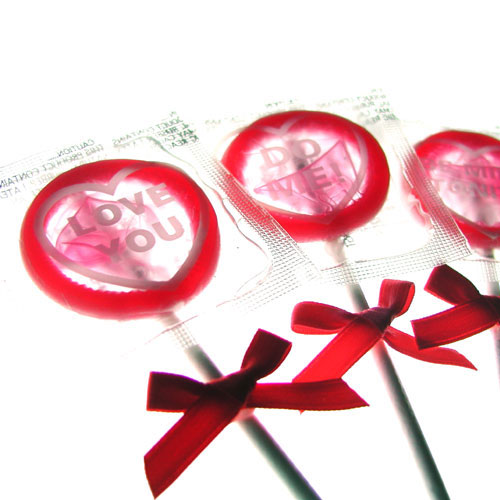
Candy Condoms

condom earring
condom in case
candy condom
condom lollipop
sweet condom
flavored condoms
condom packs like candy
preventing aids

Saturday, December 02, 2006

What is Hymen?

A hymen is the thin piece of tissue that partially blocks the entrance to
the vagina. It is sometimes called the maidenhead or cherry. It is named
after the Greek god of marriage and has no known biological function.
Although some women are born without a hymen, most have one, and the hymen
varies in size and shape from woman to woman. The hymen usually does not
cover the entire vaginal opening, since there must be some way for the
menstrual fluid, or period, to leave the body.
The hymen has historically been a marker of a woman's virginity. The belief
that since the hymen blocked the vaginal opening, it should remain intact as
long as a woman did not have sexual intercourse was widely propagated,
especially in cultures where a woman's virginity was highly valued. If an
unmarried woman's hymen was found to be separated, grave consequences could
result, depending on each culture's customs. In some Australian tribes it is
the custom for a specially appointed older woman to perforate the hymen of a
bride one week before her marriage. If it is found that the hymen has
already separated from the vaginal walls prior to this ritual, the woman is
subject to public humiliation, torture, and sometimes death.
But it is scientific fact that the hymen can be separated for reasons quite
unconnected to sexual intercourse. It can separate when the body is
stretched strenuously, as in athletics; it can be separated by inserting a
tampon during menstruation or through masturbation; and sometimes it is
separated for no apparent reason. A separated hymen is not an indication of
having had intercourse, nor can it prove a loss of virginity. In fact, some
women must have their hymen surgically removed before the birth of their
first child because it is so flexible or small that it remains intact during
intercourse.
When the hymen is separated, whether during first intercourse or at some
other time, there may be some slight bleeding and a little pain. Both the
bleeding and the pain are quite normal and both usually stop after a short
time. Some women experience no discomfort at all during this process that is
commonly referred to as "losing your cherry".
It is important to remember that a woman can become pregnant even if her
hymen is intact and no penis has entered her vagina. If sperm comes in
contact with the labia or general vaginal area, it can move through the
opening in the vagina and possibly lead to a pregnancy. An intact hymen
should not be considered a form of birth control.
As with most information on sexuality, a woman learns about her hymen in
many ways, but rarely from parents, physicians or informed adults in a
supportive and sensitive manner. Rather, it seems that women learn about the
hymen in ways that promote anxiety and uncertainty about their own bodies
and behaviors. Knowing the facts about the hymen can help women dispel the
myth that it proves virginity, freeing them from the negative effects of
popular mythology. Having accurate information about the hymen can assist in
normalizing a woman's fears about her body and help promote greater
self-acceptance.

Thursday, November 16, 2006

Benefits of Lovemaking

1. Sex is a beauty treatment. Scientific tests find that when women make love they produce amounts of the hormone estrogen, which makes hair shine and skin smooth.


2. Gentle, relaxed lovemaking reduces your chances of suffering dermatitis, skin rashes and blemishes. The sweat produced cleanses the pores and makes your skin glow.


3. Lovemaking can burn up those calories you piled on during that romantic dinner.


4. Sex is one of the safest sports you can take up. It stretches and tones up just about every muscle in the body. It's more enjoyable than swimming 20 laps, and you don't need special sneakers!


5. Sex is an instant cure for mild depression. It releases endorphins into the bloodstream, producing a sense of euphoria and leaving you with a feeling of well-being.


6. The more sex you have, the more you will be offered. The sexually active body gives off greater quantities of chemicals called pheromones. These subtle sex perfumes drive the opposite sex crazy!


7. Sex is the safest tranquilizer in the world. IT IS 10 TIMES MORE EFFECTIVE THAN VALIUM.


8. Kissing each day will keep the dentist away. Kissing encourages saliva to wash food from the teeth and lowers the level of the acid that causes decay, preventing plaque build-up.


9. Sex actually relieves headaches. A lovemaking session can release the tension that restricts blood vessels in the brain.


10. A lot of lovemaking can unblock a stuffy nose. Sex is a natural antihistamine. It can help combat asthma and hay fever.